Historical Overview
Country: Sultanate of Zanzibar (then People's Republic of Zanzibar; then Tanzania)
Main Location: Zanzibar City (Stone Town and Ng'ambo), Zanzibar
Beginning Date: 12 January 1964 (night attack on police armoury)
End of Revolutionary Uprising: 12–13 January 1964 as seizure of the islands; mass killings continued for days; union with Tanganyika 26 April 1964
Broader Revolutionary Period: 1964
Movement Type: Popular-Military Revolution; Racial-Social Upheaval; Anti-Sultanate Coup
Principal Organization: Umbrella of African militants around John Okello; Afro-Shirazi Party (Abeid Karume) as the political inheritor
Opposing Power: Sultan Jamshid bin Abdullah; Arab-dominated Zanzibar Nationalist Party government of Muhammad Shamte
Major Participants: African police mutineers and crowd fighters, ASP Youth, Arab and South Asian victims, British-watched but non-intervening diplomats.
Years used on the map: 1964.
Mapped place: Zanzibar City, Tanzania.
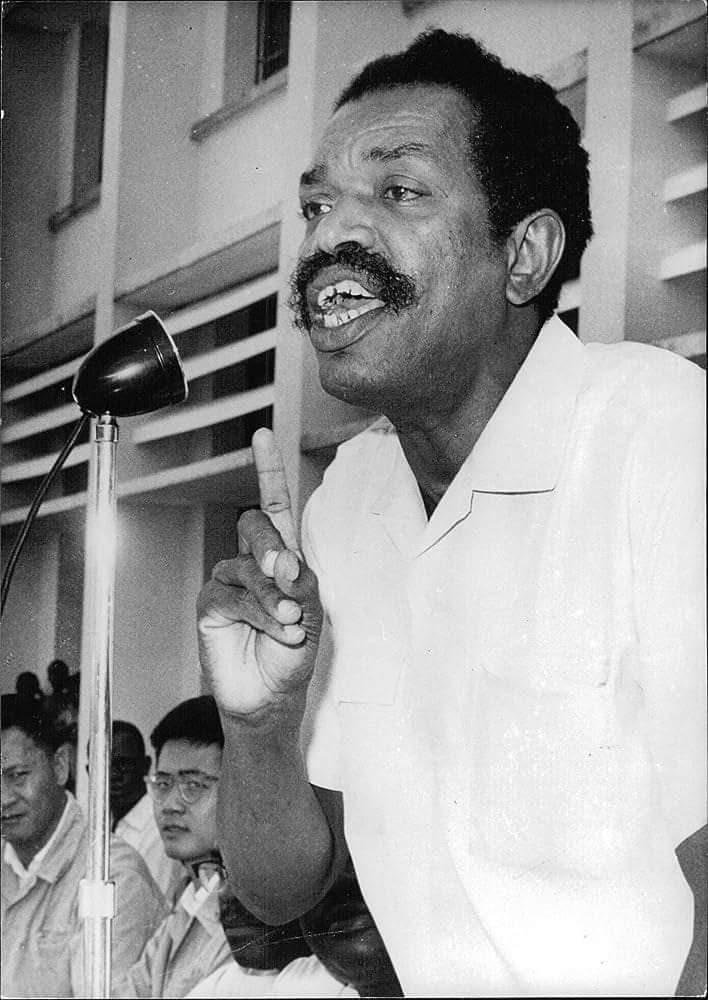
The Zanzibar Revolution of 12 January 1964 overthrew the newly independent Sultanate a month after the British left. Ugandan-born John Okello led a night seizure of police weapons; Sultan Jamshid fled.
Thousands of Arabs and others were killed in days of racial-social violence whose numbers remain disputed (from hundreds to many thousands).
Abeid Karume and the Afro-Shirazi Party took the state Okello had seized and soon pushed Okello out.
Abdulrahman Babu's Umma Party provided a left intellectual current. On 26 April 1964 Zanzibar united with Tanganyika as Tanzania — partly to freeze a Cuban-scale scare in Western chancelleries.
The revolution remains the islands' defining, and most painful, modern event.
1. A night revolution against a sultanate one month independent.
2. Mass racial killings.
3. Union with Tanganyika within months.
Historical Background and Causes
A clove-plantation society with an Arab dynasty, African majority, and 1963 elections that gave the ASP a majority of votes but not of seats produced a legitimacy crisis. Independence on 10 December 1963 under Shamte looked like independence without majority rule.
A. Rigged Independence Bargain
Seats versus votes in 1963.
B. Plantation Racial Hierarchy
African labour, Arab owners.
C. Okello's Militia
A man with a plan and a megaphone.
D. Police African Rank-and-File
E. Cold War Context
Umma leftism and Western panic.
Formation and Organisation
Okello, a self-styled field marshal, used radio terror and captured rifles. Karume's ASP had the party; Babu had cadres. Within weeks Karume's group monopolised power. Okello was expelled in March 1964 and later died obscurely in Uganda.
Major Organizations Organization Historical Role Okello's fighters Military seizure 12 January Afro-Shirazi Party Political inheritor Umma Party Left intellectual ally Sultanate / ZNP-ZPPP Overthrown government Tanganyika (Nyerere) Union partner April 1964
Beginning of the Revolution
Date: 12 January 1964 (night attack on police armoury) Before dawn on 12 January, rebels took Ziwani police armoury, then Stone Town. The sultan fled by yacht. Radio Zanzibar announced African rule in Okello's voice. Killings and rapes in rural plantation areas followed, a social war on a racial map.
Major Developments • 12 January 1964. • Sultan flees. • Massacres. • Okello sidelined.
Karume's State, Okello's Expulsion and the Union
Karume became president of the People's Republic, nationalised land, and ran an authoritarian ASP state. Western diplomats feared a communist Zanzibar; Nyerere offered union. The 1964 Articles of Union still structure Tanzanian politics. Discussion of the death toll was long taboo in official tourism Zanzibar.
A. 12 January
B. Mass violence
C. Karume not Okello
Party captures the revolution.
D. April union
Major Events and Developments
Date Event Historical Importance 10 Dec 1963 Independence under sultan Old order in new flag 12 Jan 1964 Revolution Sultanate falls March 1964 Okello expelled ASP monopoly 26 April 1964 Union with Tanganyika Tanzania's origin
Key figures
People filed under this revolution: John Okello, Abeid Amani Karume, Sultan Jamshid bin Abdullah, Abdulrahman Muhammad Babu, Abdullah Kassim Hanga, Muhammad Shamte Hamadi.
Historical Significance and Legacy
12 January is Revolution Day in Zanzibar, celebrated and bitterly remembered. The union created Tanzania. The death toll and racial targeting remain the moral problem at the centre of island history, often whispered rather than officially numbered.
1. Overthrow of the sultanate.
2. Majority-party claim to the state.
3. Land nationalisation of clove plantations.
4. Union that formed Tanzania.
5. A left intellectual archive (Babu).
6. End of the 1963 minority-seat government.
Historical Limitations Mass racial killings. Okello's terror radio. Rapid authoritarianism under Karume. Execution of Hanga.
Historical silence. Tourism-era unease with the founding violence.
Chronology and Conclusion
Year / Date Historical Development 10 Dec 1963 Independence 12 Jan 1964 Revolution March 1964 Okello expelled 26 April 1964 Union Conclusion The Zanzibar Revolution took a sultanate in a night and then took thousands of lives in a social-racial settling of plantation accounts.
Karume's party kept the islands; Nyerere's union kept the map; Okello kept only a memoir.