Historical Overview
Country: Spanish kingdom of New Mexico (now United States)
Main Location: Santa Fe, New Mexico, United States (coordination across Tewa, Taos, Acoma, Hopi and other pueblos)
Beginning Date: 10–11 August 1680 (knotted cords timed the rising; Santa Fe besieged)
End of Revolutionary Uprising: 21 August 1680 (Governor Antonio de Otermin evacuates Santa Fe toward El Paso); Spanish exile until the 1692 Vargas reconquest
Broader Revolutionary Period: 1680 (Spanish absence 1680–1692)
Movement Type: Indigenous Coordinated Revolt; Anti-Colonial and Anti-Mission Uprising
Principal Organization: Pueblo religious-military coalition under Po'pay (Popé) of Ohkay Owingeh
Opposing Power: Spanish civil government, Franciscan missions, encomienda labour
Major Participants: Tewa, Taos, Picuris, Tano, Keres, Zuni, Hopi fighters; Spanish settlers and friars; allied or coerced Apache in some accounts.
Years used on the map: 1680.
Mapped place: Santa Fe, New Mexico, United States.
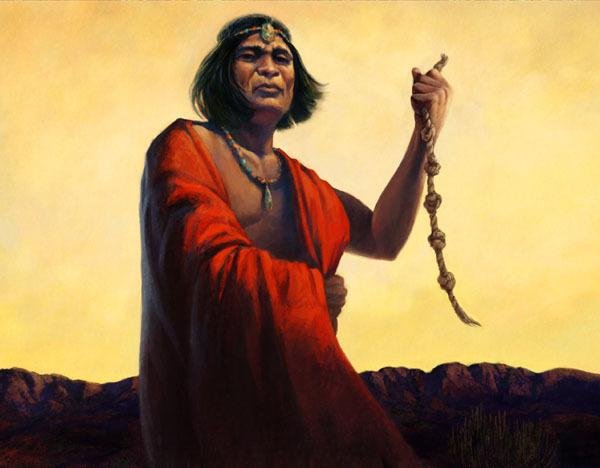
The Pueblo Revolt of August 1680 is the most complete Indigenous victory over a European colony in the present United States. Po'pay of Ohkay Owingeh (San Juan) coordinated knotted-cord calendars so distant pueblos struck together. Governor Antonio de Otermin was besieged in Santa Fe and fled south.
Twenty-one Franciscans and hundreds of Spanish died. Missions were burned; kachina practice returned to public view.
For twelve years New Mexico was again Pueblo-governed, if fractiously. Diego de Vargas's 1692–96 reconquest did not fully restore the 1670s mission-encomienda machine. 1680 remains the continent's proof that a colonial capital could be emptied by a timed Indigenous war.
1. A multi-pueblo general rising, not a single-town riot.
2. Santa Fe evacuated.
3. A twelve-year interruption of Spanish rule.
Historical Background and Causes
Drought, famine, Apache/Navajo pressure, Franciscan assaults on kivas, and labour drafts after the 1670s made a sacred war conceivable. Po'pay's message mixed religious restoration with military secrecy (messengers, cords, death for informers).
A. Suppression of Kachina Religion
Friars as the first targets.
B. Encomienda and Tribute
Corn and labour extracted in drought.
C. Po'pay's Coordination
A general staff of runners.
D. Famine and Disease
E. Distance from Mexico City
Formation and Organisation
War captains in each pueblo moved on the same August days. Spanish-speaking Pueblo auxiliaries were crucial intelligence. After victory, Po'pay's authority was contested by other towns — a revolution without a lasting Indigenous state apparatus, yet with a lasting political result: Spanish return on negotiated, not purely conquering, terms.
Major Organizations Organization Historical Role Po'pay's coalition Strategic centre Local war captains Simultaneous attacks Franciscan missions Primary religious target Santa Fe villa Colonial capital besieged Otermin's column Retreat to El Paso
Beginning of the Revolution
Date: 10–11 August 1680 (knotted cords timed the rising; Santa Fe besieged) Cords with knots counted down to 11 August (some towns struck on the 10th when the plot leaked).
Isolated estancias and missions fell in hours. Santa Fe's siege was the conventional war inside a general rising. Water and food decided Otermin's exit.
Major Developments • Knotted-cord countdown. • Mission killings 10–11 August. • Siege of Santa Fe.
• 21 August evacuation. • 1680–92 Pueblo interregnum.
Evacuation, Interregnum and the Price of Reconquest
Otermin's 1681 attempt to return failed. Pueblo politics split: some leaders (Luis Tupatú of Picuris) bargained, others held the restoration line. Vargas entered in 1692 with a ceremonial 'bloodless' claim that 1696's second revolt bloodied. The colonial regime that stuck after 1696 banned some of the worst 1670s abuses. 1680 thus bargained the future even in defeat of the fully independent interval.
A. August 1680
B. 1680–92
Indigenous government of the kingdom.
C. 1692
D. 1696
Second revolt and settlement.
Major Events and Developments
Date Event Historical Importance 10–11 Aug 1680 General rising Missions fall Aug 1680 Siege of Santa Fe Capital isolated 21 Aug 1680 Spanish evacuation Colonial collapse Otermin's failed return Interregnum holds 1692–96 Vargas reconquest Spanish return, altered
Key figures
People filed under this revolution: Po'pay (Popé), Antonio de Otermin, Alonso García, Luis Tupatú, Francisco Xavier, Juan Bernal / Franciscan custody of the kingdom (Fray Juan Bernal as custos).
Historical Significance and Legacy
1680 is taught as the greatest Indigenous military success in the U.S. Southwest. It delayed and modified reconquest, preserved ceremonial cycles, and stands beside other hemispheric anti-colonial risings. Santa Fe's later civic myth still has to share the plaza with that August.
1. Evacuation of the colonial capital.
2. Destruction of the mission system of 1680.
3. Twelve-year interruption of Spanish rule.
4. Public restoration of Pueblo religion.
5. Demonstrated pan-Pueblo coordination.
6. Bargaining power in the 1690s return.
Historical Limitations Internal Pueblo splits after victory. Spanish return under Vargas. Incomplete written Pueblo archive (Spanish paper dominates). Violence against Hispanic households and friars as a moral file for later memory. Not all pueblos participated equally.
Chronology and Conclusion
Year / Date Historical Development 10–11 Aug 1680 Rising 21 Aug 1680 Santa Fe evacuated Failed Spanish return Vargas entrada Conclusion The Pueblo Revolt timed a sacred war so that Santa Fe became an island, then a road of retreat. Po'pay's cords did what separate town revolts had not.
Spain came back. It came back into a land that had already said no, and proved it.