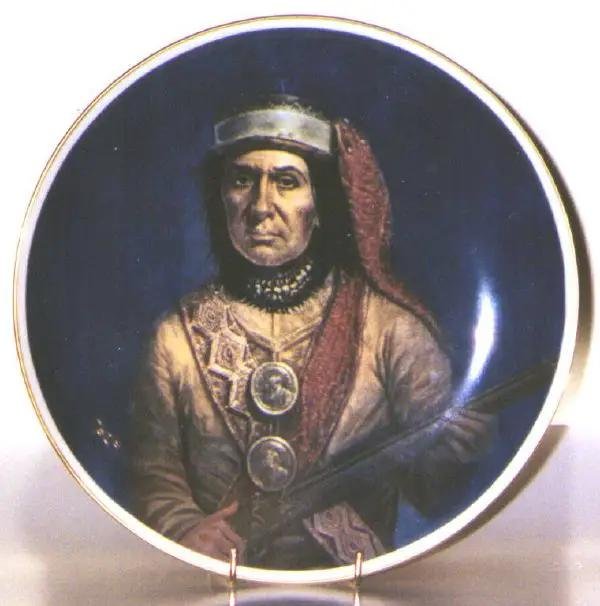
Historical Overview
Country: British North America after the Conquest of New France (now United States / Canada borderlands)
Main Location: Detroit, Michigan, United States (war also at Michilimackinac, Pitt, Niagara, Illinois country)
Beginning Date: May 1763 (Pontiac's siege of Detroit; coordinated attacks on British posts)
End of Revolutionary Uprising: 1766 (Pontiac's peace with Sir William Johnson; fighting tapered 1764–65 after Bouquet and Bradstreet)
Broader Revolutionary Period: 1763–1766
Movement Type: Indigenous Multi-Nation War; Anti-British Post-Conquest Rising
Principal Organization: Ottawa-led coalition under Pontiac; Delaware, Shawnee, Ojibwe, Potawatomi, Seneca (Chenussio) and others; spiritual frame of Neolin
Opposing Power: British Army (Jeffery Amherst, Henry Bouquet, Henry Gladwin); incoming settler pressure
Major Participants: Great Lakes and Ohio nations, British garrison troops, traders, colonial militias, Sir William Johnson's Indian Department.
Years used on the map: 1763–1766.
Mapped place: Detroit, Michigan, United States.
Pontiac's War (1763–1766) was a pan-Indigenous attempt to roll back British occupation of former French posts after 1760. Pontiac, an Odawa (Ottawa) leader, besieged Detroit while other nations took a dozen forts from Pennsylvania to Michigan. Michilimackinac fell by lacrosse stratagem. The Delaware prophet Neolin's nativist teaching framed the war as a sacred clearing of British pollution.
Amherst's biological-warfare correspondence (smallpox blankets at Pitt) stains the British file.
Bouquet's 1764 expedition and Johnson's diplomacy ended the high war. The 1763 Royal Proclamation, issued during the fighting, tried to freeze a settler frontier the war had made politically necessary.
Detroit held; the British monopoly of the interior did not go unchallenged.
1. A multi-fort rising, Detroit as the longest siege.
2. Neolin's religion as program.
3. Proclamation of 1763 as a wartime British concession to reality.
Historical Background and Causes
French gift diplomacy had ended; Amherst cut presents and treated nations as conquered subjects. The Covenant Chain strained. Ohio Valley squatters were already a fact. Pontiac's coalition answered a new empire's manners as much as its flag.
A. End of French Alliance
A diplomatic world erased.
B. Amherst's Gift Policy
C. Neolin's Teaching
Sacred boycott of British ways.
D. Fort Occupation
British garrisons in Native living rooms.
E. Settler Surge
Formation and Organisation
There was no European-style general staff. Runners and councils aligned May attacks. Pontiac's Detroit was the political centre of gravity; Seneca western door and Delaware-Shawnee Ohio war were coequal fronts. Failure to take Detroit and Pitt kept the war from expelling the British entirely.
Major Organizations Organization Historical Role Pontiac's Detroit coalition Long siege Ojibwe at Michilimackinac Fort taken by ruse Delaware / Shawnee Ohio-Pitt front British garrisons Post system Johnson's Indian Department Diplomatic endgame
Beginning of the Revolution
Date: May 1763 (Pontiac's siege of Detroit; coordinated attacks on British posts) On 7 May 1763 Pontiac's first ruse at Detroit failed; open siege followed. By June, Sandusky, St.
Joseph, Miami, Ouiatenon, Michilimackinac, Venango, Le Boeuf and Presque Isle had fallen or been abandoned. Fort Pitt and Detroit became the British islands.
Major Developments • May 1763 Detroit siege. • June fort-takings. • Bloody Run (31 July).
• 1764 Bouquet/Bradstreet. • 1766 Johnson-Pontiac peace.
Bouquet, Smallpox File and the 1766 Peace
The Battle of Bushy Run (August 1763) relieved Pitt. Amherst's letters on smallpox are documented; the epidemic's full military effect remains argued. Bradstreet's 1764 treaties were hasty; Bouquet's more feared. Pontiac, never emperor of all nations, signed a separate peace in 1766 and was later killed at Cahokia in 1769. The war's British lesson was expensive: presents returned, a proclamation line drawn, and a frontier still unpacified toward 1775.
A. May–June 1763
B. Sieges of Detroit and Pitt
C. 1764 campaigns
D. 1766
Major Events and Developments
Date Event Historical Importance 7 May 1763 Detroit ruse fails / siege Opening 2 June 1763 Michilimackinac taken Northern shock 31 July 1763 Bloody Run British sortie beaten 5–6 Aug 1763 Bushy Run Pitt relieved July 1766 Pontiac-Johnson peace Political end
Key figures
People filed under this revolution: Pontiac (Obwandiyag), Neolin, Henry Gladwin, Jeffery Amherst, Henry Bouquet, Guyasuta, Sir William Johnson.
Historical Significance and Legacy
Pontiac's War forced the Proclamation Line and taught the British that the interior was still Indigenous.
It entered U.S. school memory as a 'conspiracy' and is now taught as a war. Detroit's survival as a British post shaped the later 1770s map. Amherst's smallpox file remains a moral document of empire.
1. Capture of numerous British forts.
2. A multi-nation coalition of rare scale.
3. Detroit siege of months.
4. Forced British diplomatic reversal (presents, proclamation).
5. Neolin's nativism as a recorded program.
6. Bushy Run as a documented set-piece (for the other side).
7. A namesake Indigenous strategist of continental fame.
Historical Limitations Detroit and Pitt held. Coalition not a state. Pontiac's later murder. Disease and hunger. Proclamation Line soon violated. British recovery by 1765. Uneven participation among Haudenosaunee.
Chronology and Conclusion
Year / Date Historical Development May 1763 Detroit siege June 1763 Forts fall Year / Date Historical Development Aug 1763 Bushy Run Bouquet/Bradstreet Peace Conclusion Pontiac's War tried to evict a stingy new empire from the Great Lakes and Ohio posts. It took a dozen forts and not Detroit.
The British stayed. They stayed on cheaper, more frightened terms, with a proclamation line written in wartime ink.