Historical Overview
Country: Spanish Louisiana (upriver plantation district)
Main Location: Pointe Coupée, Louisiana (plantation coast of the False River country; New Orleans as the governor's distant ear)
Beginning Date: 1795 (upriver conspiracy among enslaved people of Pointe Coupée, with Haitian-year politics in the talk)
End of Revolutionary Uprising: 1795 (Carondelet's repression; executions along the river as a Spanish lesson)
Broader Revolutionary Period: 1795
Movement Type: Plantation Conspiracy; Anti-Slavery Rising Plot
Principal Organization: Enslaved organisers of Pointe Coupée plantations (Antoine, Jean-Baptiste, and fellows in the Spanish lists); some free or white Jacobin-tinged talk at the edges of the file
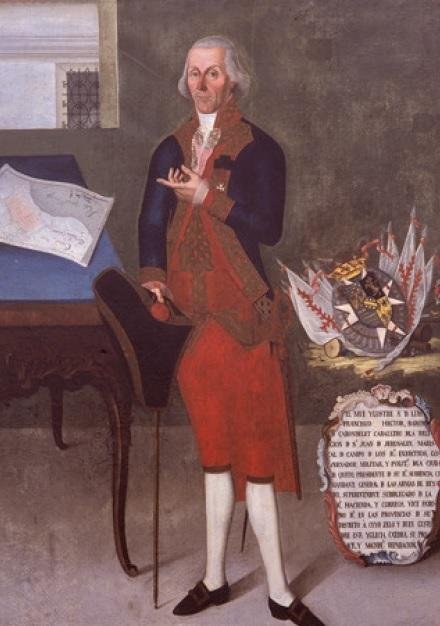
Opposing Power: Governor Francisco Luis Héctor de Carondelet; Pointe Coupée militia and planters (including the Poydras world as a social centre of the district)
Major Participants: Enslaved people of the False River plantations, Spanish colonial troops and militia, planters, informers, a New Orleans government already trained by 1791's city scare.
Years used on the map: 1795.
Mapped place: Pointe Coupée, Louisiana, United States.
The Pointe Coupée Conspiracy of 1795 was Spanish Louisiana's upriver plantation plot: enslaved organisers on the False River coast, Haitian news in their mouths, broken by denunciation and closed by Carondelet with executions meant to be seen from the levee.
It is not the Mina Conspiracy of 1791 in New Orleans. Different year, different place, different social army: a plantation district versus an urban nation. Carondelet, not Miró, is the governor of this terror.
Julien Poydras's estate world is geography, not a claim that the poet-planter authored the plot.
1. 1795 upriver, not 1791 city.
2. Carondelet's levee examples.
3. Haitian talk on a Spanish plantation coast.
Historical Background and Causes
Pointe Coupée was a Creole plantation district of the Mississippi, rich in bound labour and in rumours from Saint-Domingue. Spanish night patrols were thinner than in New Orleans. 1795's conspiracy used that distance. Planters wanted a massacre of a plot; the governor wanted a theatre of order for an empire watching Haiti.
A. Plantation density
A coast of bound neighbours.
B. Haitian news four years on
1791 had become a continuing war.
C. Distance from the city cabildo
Upriver nights less watched.
D. Creole and Spanish splits
E. Informers again
A plot that reached a planter ear.
Formation and Organisation
Night meetings across estates, talk of killing masters and of a timed blow, a leak, militia arrests, sentences of hanging and of heads displayed. Some files implicate white or free talkers of French revolutionary language; the core remains enslaved. 1791's Mina captains were a city nation; 1795's captains are plantation men of Pointe Coupée.
Major Organizations Organization Historical Role Pointe Coupée enslaved organisers Plot core Planter militia Local suppression Carondelet Colonial terror-sovereign Informers Hinge
Beginning of the Revolution
Date: 1795 (upriver conspiracy among enslaved people of Pointe Coupée, with Haitian-year politics in the talk) 1795: meetings on the False River estates. A word to a master or a priest. Jail in the district and orders from New Orleans. Executions. The beginning is a plantation conversation. The end is a river of examples.
Major Developments • Estate organising. • Denunciation. • Carondelet's sentences.
Carondelet's River, Poydras's Coast, a Plot That Is Not Mina
Keep 1795 off the 1791 New Orleans card. Carondelet's repression here is a plantation governor's craft: visible death for a rural public. Poydras later wrote poetry and philanthropy; in 1795 his district was a slave coast under Spanish panic. 1811's German Coast would be a later Louisiana army of the enslaved.
This year is a conspiracy killed in the egg, loudly.
A. Meetings
B. Leak
C. 1795 deaths
Major Events and Developments
Date Event Historical Importance Pointe Coupée plot Opening Denunciation and arrests Turn Executions End
Key figures
People filed under this revolution: Antoine, Jean-Baptiste, and enslaved captains of Pointe Coupée (1795), Francisco Luis Héctor, Baron de Carondelet, Julien Poydras (planter of the Pointe Coupée coast), Pointe Coupée militia and planters of 1795, Informers of the 1795 plantation meetings, Enslaved field people of the False River coast (1795).
Historical Significance and Legacy
1795 is Pointe Coupée's plantation conspiracy, Carondelet's levee year, to be catalogued beside — not inside — New Orleans Mina 1791. Haitian news is the weather. Spanish terror is the method. 1811 would be a later Louisiana field army.
1. A dated upriver plot distinct from 1791.
2. Named captains in a Spanish proceso.
3. Exposed False River plantation density as politics.
4. Forced a governor's public terror.
5. A file that maps Louisiana into the Haitian decade.
6. Keeps Poydras's coast as geography of bondage.
Historical Limitations Broken before a rising in arms. Executions as spectacle. Archive is Spanish-planter. Easy to conflate with Mina 1791. White-Jacobin edges can crowd enslaved authors. Not 1811. Haiti can be over-read as a script.
Chronology and Conclusion
Year / Date Historical Development Plot Leak Executions Conclusion The Pointe Coupée Conspiracy of 1795 was an upriver plantation plot broken by Carondelet with levee executions.
It was not Mina New Orleans of 1791. Same colony, other river, other year. The Spanish lesson was meant to be seen.