Historical Overview
Country: Ethiopian Empire (Sidamo-Oromo south; Addis as the imperial court pole)
Main Location: Addis and Sidamo-Oromo, Ethiopia (Balcha’s southern governorship and the 1928 march on the capital)
Beginning Date: Late 19th century (Balcha as Menelik’s southern commander in Oromo Sidamo)
End of Revolutionary Uprising: early 20th century listed span, including the 1928 confrontation with Ras Tafari; Balcha’s later 1936 death fighting Italy sits as coda
Broader Revolutionary Period: Late 19th–early 20th century
Movement Type: Oromo-Southern Military Lordship; Resistance inside and against Imperial Centralisation
Principal Organization: Dejazmach Balcha Safo’s Sidamo household troops; southern Oromo soldiery of his governorship
Opposing Power: Italian threat at Adwa era (as imperial soldier); later Ras Tafari’s centralising state of the 1920s
Major Participants: Oromo fighters of Sidamo, Balcha’s neftenya-style household, Menelik’s court, Zewditu-Tafari 1920s politics, imperial Addis.
Years used on the map: 1800–1899.
Mapped place: Addis, Sidamo-Oromo, Ethiopia.
Dejazmach Balcha Safo’s career is Oromo-southern military power inside Menelik’s empire and then a 1928 refusal of Ras Tafari’s new centre: a governor-soldier who had fought at Adwa and would not become a quiet provincial ornament.
The listed span is late nineteenth to early twentieth century, with 1928 as the inner-political climax.
This is not an Italian-war how-to and not a separate Oromo nationalist party file; it is Balcha’s lordship as resistance to being erased by the palace.
1. Sidamo command as Oromo military fact.
2. Menelik’s orbit then Tafari’s.
3. 1928 as the palace confrontation.
Historical Background and Causes
Menelik’s southern expansion used Oromo and other southern soldiers as much as it conquered Oromo lands. Balcha, of humble Oromo origin in court story, became a dejazmach whose Sidamo was a personal army. Tafari’s 1920s reform was a project to break such armies.
A. Southern Governorship
A personal army in Sidamo.
B. Oromo Soldiery
Men who were the empire’s edge.
C. Tafari Centralisation
New ministries against old lords.
D. Adwa Capital
E. 1928 March
The lord bringing troops to Addis as argument.
Formation and Organisation
Balcha’s organisation was a household army and a provincial treasury, not a modern staff. Menelik had needed that. Tafari needed it gone. 1928’s theatre in Addis was a siege of etiquette and muskets that ended with Balcha outmanoeuvred, not with a southern secession.
Major Organizations Organization Historical Role Balcha’s household Southern army Sidamo Oromo soldiery Social base Menelik’s court Nineteenth-century roof Ras Tafari Twentieth-century opponent
Beginning of the Revolution
Date: Late 19th century (Balcha as Menelik’s southern commander in Oromo Sidamo) From the 1890s Balcha was a named sword of the southern empire. The early twentieth century made him a problem of succession politics: too famous to dismiss quietly, too independent to live under Tafari’s new army lists.
Major Developments • Adwa-era command. • Sidamo governorship. • 1928 Addis confrontation.
• Later anti-Italian coda.
1928: A Southern Army in the Capital’s Eye
In 1928 Balcha brought force toward Addis in a crisis with Ras Tafari under Empress Zewditu. Palace politics isolated him; his troops were peeled away. He lost the governorship’s old autonomy. 1936, when he died fighting the Italian invasion as an old man, is remembered as honour after humiliation — still not a manual, only a date.
A. Menelik years
B. 1920s
C. 1928
Major Events and Developments
Date Event Historical Importance 1890s Southern command Opening 1920s Conflict with Tafari Rising Addis confrontation Peak of listed politics
Key figures
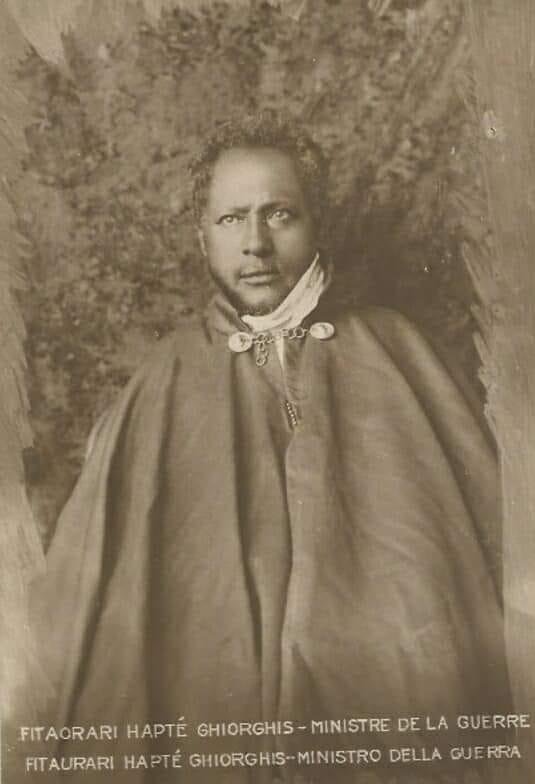
People filed under this revolution: Dejazmach Balcha Safo, Menelik II, Ras Tafari (Haile Selassie), Fitawrari Habte Giyorgis, Empress Zewditu, Oromo household troops of Sidamo under Balcha.
Historical Significance and Legacy
Balcha sits in Ethiopian memory as Adwa’s fierce governor and Tafari’s 1928 obstacle; in Oromo readings he is also a southern army that the centre had to break. Both readings share the dates.
1. A durable Sidamo command.
2. Adwa-era military fame.
3. A 1928 armed political challenge.
4. Oromo soldiery visible inside imperial history.
Historical Limitations Not a secession. 1928 isolation. Palace sources crowd the file. Later 1936 death easy to turn into a war story this span does not need. Personal army dismantled.
Chronology and Conclusion
Year / Date Historical Development 1890s Southern command 1920s Tafari pressure Addis crisis Conclusion Balcha’s Oromo-southern resistance was a Sidamo army inside the empire that refused Ras Tafari’s new centre in 1928.
The palace won the troops. The dates remain a southern argument.