Historical Overview
Country: Korea under Japanese colonial rule
Main Location: Seoul, Korea (nationwide protests; declaration at Tapgol / Pagoda Park)
Beginning Date: 1 March 1919 (public reading of the Declaration of Independence)
End of Revolutionary Uprising: spring–autumn 1919 (protests suppressed; Provisional Government in Shanghai formed 11 April 1919)
Broader Revolutionary Period: 1919 (political aftermath through the 1920s cultural movement)
Movement Type: Nationwide Non-Armed Independence Demonstrations; National Self-Determination Uprising
Principal Organization: National representatives (33 signers); Chondogyo, Christian and Buddhist networks; student groups
Opposing Power: Japanese Government-General of Korea; military and military police
Major Participants: Students, church congregations, Chondogyo believers, market crowds, rural villages across the peninsula, women such as Yu Gwan-sun.
Years used on the map: 1919.
Mapped place: Seoul, South Korea.
The March First Movement was a peninsula-wide declaration of Korean independence on 1 March 1919, timed to the funeral of Emperor Gojong and to Wilsonian talk of self-determination after Versailles. Thirty-three religious and civic leaders signed a declaration drafted in the orbit of Choe Nam-seon; students read it in Seoul as crowds shouted Manse.
Japanese police fired, arrested, and tortured. Yu Gwan-sun became the student martyr of the west. A Provisional Government formed in Shanghai. Tokyo shifted from military police rule toward a 'cultural policy' without granting independence. 1 March is South Korea's Independence Movement Day.
1. A peaceful national declaration met with colonial bullets.
2. Religious coalition of Chondogyo, Christians and Buddhists.
3. Shanghai Provisional Government as political sequel.
Historical Background and Causes
Annexation in 1910, land surveys, and the 1918–19 Wilson moment — plus rumours around Gojong's death — created a public ready to speak. Exiles in the U.S., China and Siberia were already petitioning Paris. The domestic plan was non-violence.
A. Japanese Annexation 1910
B. Gojong's Death 1919
Funeral as national gathering.
C. Versailles / Wilson
Language of self-determination.
D. Religious Networks
Churches and Chondogyo as organisation.
E. Student Politics
Seoul and Pyongyang schools.
Formation and Organisation
The 33 signers chose arrest rather than flight. Students carried the street. Provincial copies of the declaration spread by rail and church. Women, including mission-school girls, formed a visible column.
There was no guerrilla command — a fact later debated by armed nationalists. Major Organizations Organization Historical Role 33 national representatives Signed the declaration Chondogyo Largest religious network of 1 March Christian churches Urban and northwestern mobilisation Students Street readers of the text Shanghai Provisional Government April 1919 political continuation
Beginning of the Revolution
Date: 1 March 1919 (public reading of the Declaration of Independence) On 1 March in Seoul, the declaration was read at Pagoda Park while signers met at a restaurant to telephone the police — a deliberate civil-disobedience arrest. Crowds filled streets; similar readings occurred in towns the same week. Japanese counts of incidents ran into hundreds.
Major Developments • Funeral of Gojong as context. • 1 March reading. • Nationwide Manse.
• Mass arrests. • Shanghai government, 11 April.
Suppression, Yu Gwan-sun and the Cultural Policy Turn
Gendarmerie and army units fired on crowds; villages such as Jeam-ri suffered massacres. Yu Gwan-sun, a Ewha student from Cheonan, organised local protests, was imprisoned, and died in 1920 after torture. International missionaries reported the violence. Japan replaced Governor Hasegawa with Saito and advertised bunmei/cultural rule — newspapers and associations under censorship, not independence.
A. 1 March 1919
B. Nationwide protests
C. Martyrs
Yu Gwan-sun and others. D. Shanghai P.G. Exile government.
Major Events and Developments
Date Event Historical Importance 22 Jan 1919 Gojong dies Political opening 1 March 1919 Declaration in Seoul Movement begins March–April Peninsula protests Peak 11 April 1919 Shanghai Provisional Government Political sequel 28 Sep 1920 Yu Gwan-sun dies in prison Martyrdom
Key figures
People filed under this revolution: Yu Gwan-sun, Son Byong-hi, Han Yong-un (Manhae), Choe Nam-seon, Yi Sang-jae, Kim Kyu-sik, Syngman Rhee (Yi Seung-man).
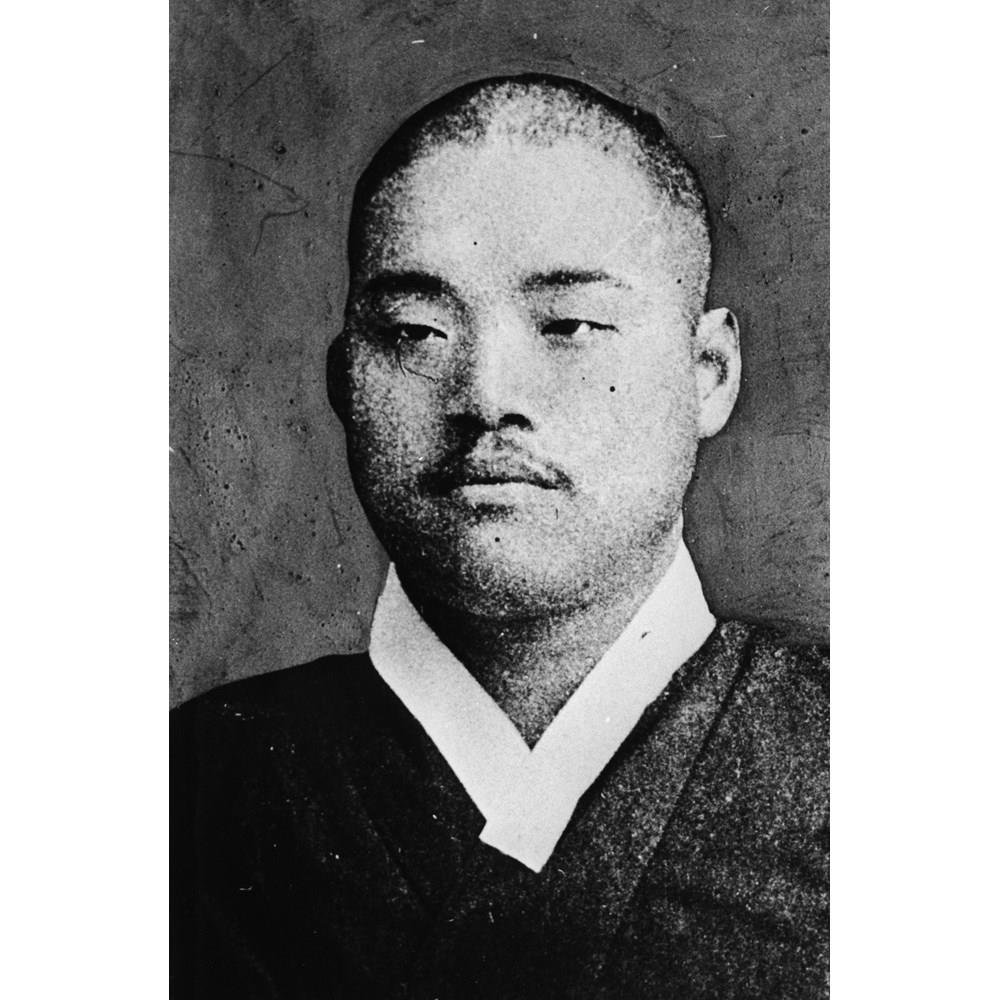
Park Eun-sik
Birth Date: 30 September 1859. Birthplace: Hwanghae. Death Date: 23 November 1925.
Death Place: Shanghai. Role: Historian of Korean independence; later president of the Shanghai Provisional Government.
Short Description: Park Eun-sik wrote The Painful History of Korea and headed the exile government after 1919's first generation.
Biography: A Confucian reformer, he interpreted March First as the people entering history. He died in Shanghai in
1925. His textbooks of pain educated the next activists. If Son Byong-hi signed, Park explained.
Classification: Nationalist historian; Provisional Government president. Verification Note: Shanghai P.G. records note his presidency and death on 23 November 1925.
8. Historical Significance and Legacy 1 March is a national holiday in the South and a claimed heritage in the North. It defined Korean independence as mass, peaceful, and religiously coalition-based — a contrast with later armed struggle in Manchuria. Yu Gwan-sun is a canonical girl patriot.
1. Nationwide synchronised declaration.
2. A written independence text.
3. International notice of Japanese repression.
4. Shanghai Provisional Government.
5. A shift in Japanese colonial policy.
6. Women's and students' political debut.
7. A national holiday still kept.
8. A martyr canon centred on Seodaemun.
Historical Limitations No independence in 1919. Versailles ignored Korea. Non-violence met rifles. Later collaboration by some 1919 figures. Armed nationalists judged it insufficient. Division after 1945 split the memory.
Chronology and Conclusion
Year / Date Historical Development 22 Jan 1919 Gojong dies 1 March 1919 Declaration April 1919 Shanghai P.G.
Yu Gwan-sun dies 1920s Cultural policy era Conclusion The March First Movement told the world, in a park in Seoul and in a hundred towns, that Korea was a nation under occupation. Japan kept the colony; it could not keep the silence.
Manse became a calendar date. Independence waited another twenty-six years.