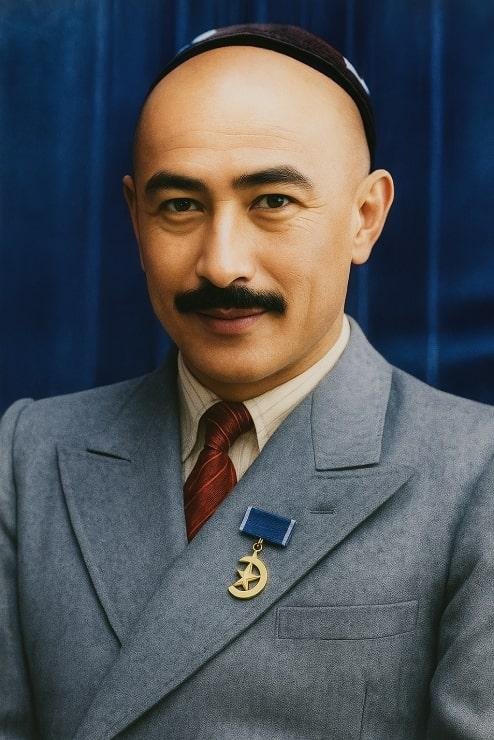
Historical Overview
Country: Xinjiang in the late Republic of China, then PRC incorporation 1949
Main Location: Ghulja (Yining), Xinjiang (Ili valley of the Second East Turkestan Republic 1944-49)
Beginning Date: November 1944 (Ili rebellion; Ghulja as capital of the second East Turkestan republic)
End of Revolutionary Uprising: 1949 (Ehmetjan Qasim and colleagues die in a plane crash en route to Beijing talks; PLA incorporation of Xinjiang)
Broader Revolutionary Period: 1944–1949
Movement Type: Ili Coalition Republic; Soviet-Border Revolution then PRC Incorporation
Principal Organization: Second East Turkestan Republic around Ehmetjan Qasim, Abdulkerim Abbas, and a multi-ethnic Ili coalition
Opposing Power: KMT Xinjiang authorities after Sheng; then the 1949 PRC as the absorbing state
Major Participants: Ili fighters of 1944, Soviet-border politics as a public fact of the republic, Ehmetjan's government, Zhang Zhizhong's 1946 coalition experiment, 1949 Beijing-bound delegation.
Years used on the map: 1944–1949.
Mapped place: Ghulja Yining, Xinjiang, China.
The 1944-49 East Turkestan republic was the Ili (Ghulja) rebellion's state: a coalition government under Ehmetjan Qasim, distinct in city, patrons, and end from Kashgar 1933-34, closing when the 1949 Beijing-bound leadership died in a plane crash and Xinjiang entered the PRC.
Unique versus the First ETR: Yining not Kashgar, Soviet-border 1940s not Ma Zhongying's 1934, Ehmetjan not Sabit Damulla. The 1946 coalition with Zhang Zhizhong is this sheet's middle, not 1933's year-state.
1. November 1944 Ili rising.
2. Ehmetjan Qasim's Ghulja government.
3. 1949 plane crash and PRC incorporation.
Historical Background and Causes
Sheng Shicai's late-1940s exit, KMT weakness, and Soviet interest in the Ili-Altai-Tacheng (Three Districts) produced a 1944 revolt with more institutional staying power than 1933. A multi-ethnic leadership used East Turkestan as a name while bargaining with Nanjing and then facing 1949's new China.
A. Three Districts Politics
Ili-Altai-Tacheng as a bloc.
B. After Sheng
C. Soviet Border
A 1940s geopolitical roof.
D. KMT Weakness
E. 1949 Revolution in China
A new absorber in Beijing.
Formation and Organisation
Ghulja government, 1946 coalition province experiment under Zhang Zhizhong, breakdown of coalition, 1949 invitation to Beijing, crash of the plane carrying Ehmetjan and Abdulkerim Abbas among others, PLA entry. Public history of a republic's end, not a manual of the Ili front.
Major Organizations Organization Historical Role Ehmetjan Qasim government Ili republic Zhang Zhizhong 1946 KMT coalition hinge Soviet-border context 1940s roof 1949 Beijing talks Fatal end of the leadership
Beginning of the Revolution
Date: November 1944 (Ili rebellion; Ghulja as capital of the second East Turkestan republic) Nov 1944: Ghulja rising. 1945: republic institutions. 1946: coalition with KMT Xinjiang. 1947-48: coalition decay. 1949: plane crash; PRC Xinjiang.
Major Developments • Nov 1944. • Ghulja institutions. • 1946 coalition. • 1949 crash and incorporation.
Ili's Republic, Not Kashgar's Year
PRC historiography calls 1944 a Three Districts revolution inside the Chinese revolution. Exile historiography calls it a second East Turkestan republic extinguished in 1949. This sheet keeps both public names and the crash as a documented political death. It will not collapse Sabit's 1933 into Ehmetjan's 1944.
A. 1944
B. 1946
C. 1949
Major Events and Developments
Date Event Historical Importance Nov 1944 Ili-Ghulja rising Opening Coalition with Zhang Zhizhong Middle Plane crash, PRC Xinjiang End
Key figures
People filed under this revolution: Ehmetjan Qasim, Abdulkerim Abbas, Zhang Zhizhong, Sheng Shicai (late exit as prelude), Ishaq Beg Munonov, Burhan Shahidi.
Historical Significance and Legacy
1944-49 is Ghulja's East Turkestan / Three Districts republic under Ehmetjan Qasim, ended in a 1949 plane crash and PRC Xinjiang. Kashgar 1933-34 remains a different republic. Two names, two cities.
1. A five-year Ili government.
2. 1946 coalition as a documented bargain.
3. Multi-ethnic leadership list.
4. Clear distinction from Sabit Damulla's year.
5. 1949 crash as a dated political end.
Historical Limitations Leaders dead 1949. Soviet role disputed in scale. PRC vs exile naming. Easy confusion with 1933. Not a surviving state.
Chronology and Conclusion
Year / Date Historical Development Nov 1944 Ili rising Coalition Crash and PRC Conclusion The 1944-49 East Turkestan republic was Ili's Ghulja government under Ehmetjan Qasim.
It was not Kashgar 1933. It ended in 1949's crash and incorporation.